
Case study
Enhancing product creation with AI in e-commerce
Helping merchants get past the blank page, designing AI-powered product descriptions and listings that feel like a tool, not a takeover.
The problem wasn't just about forms
It was about the frustration, the overwhelm, and the invisible roadblocks merchants faced when trying to bring their products to life.
We asked people, many of them new to e-commerce, to share what they love and build something they care about. But instead of feeling empowered, they felt stuck. The process of adding a product, something as simple as writing a description, became a wall they couldn't get past.
And when merchants get stuck, they stop. Every abandoned product listing is a missed opportunity: fewer products on shelves, fewer chances to sell, fewer small businesses growing into something bigger.
For the business, this wasn't just a minor friction point, it was a real risk. If we could make product creation easier, we could help more merchants list their products, sell faster, and build momentum by turning first-time sellers into long-term partners.
So we asked ourselves: how can we make this easier?
Problem
Merchants knew their products. That wasn't the issue. The challenge was translating that knowledge into a clear, compelling, and polished product listing that customers would want to buy.
Writing a product description often felt like facing a blank page. Even experienced sellers would hesitate, unsure of the right words. Add in the cluttered forms, dropdowns, and tiny fields on mobile, and the experience quickly became frustrating.
This wasn't just about making the UI prettier. It was about removing friction at a critical moment. If we could lower that barrier, we could unlock more product listings, boost sales, and help merchants feel confident as they built their businesses.
Assumptions
We assumed that merchants would value assistance in creating product descriptions, that AI could effectively generate relevant content with minimal input, and that reducing form fields would directly improve completion rates.
Process
Phase 1, AI-generated product descriptions
We knew we couldn't solve everything at once. Instead of chasing perfection, we focused on what mattered most: helping merchants overcome the mental block of writing a product description.
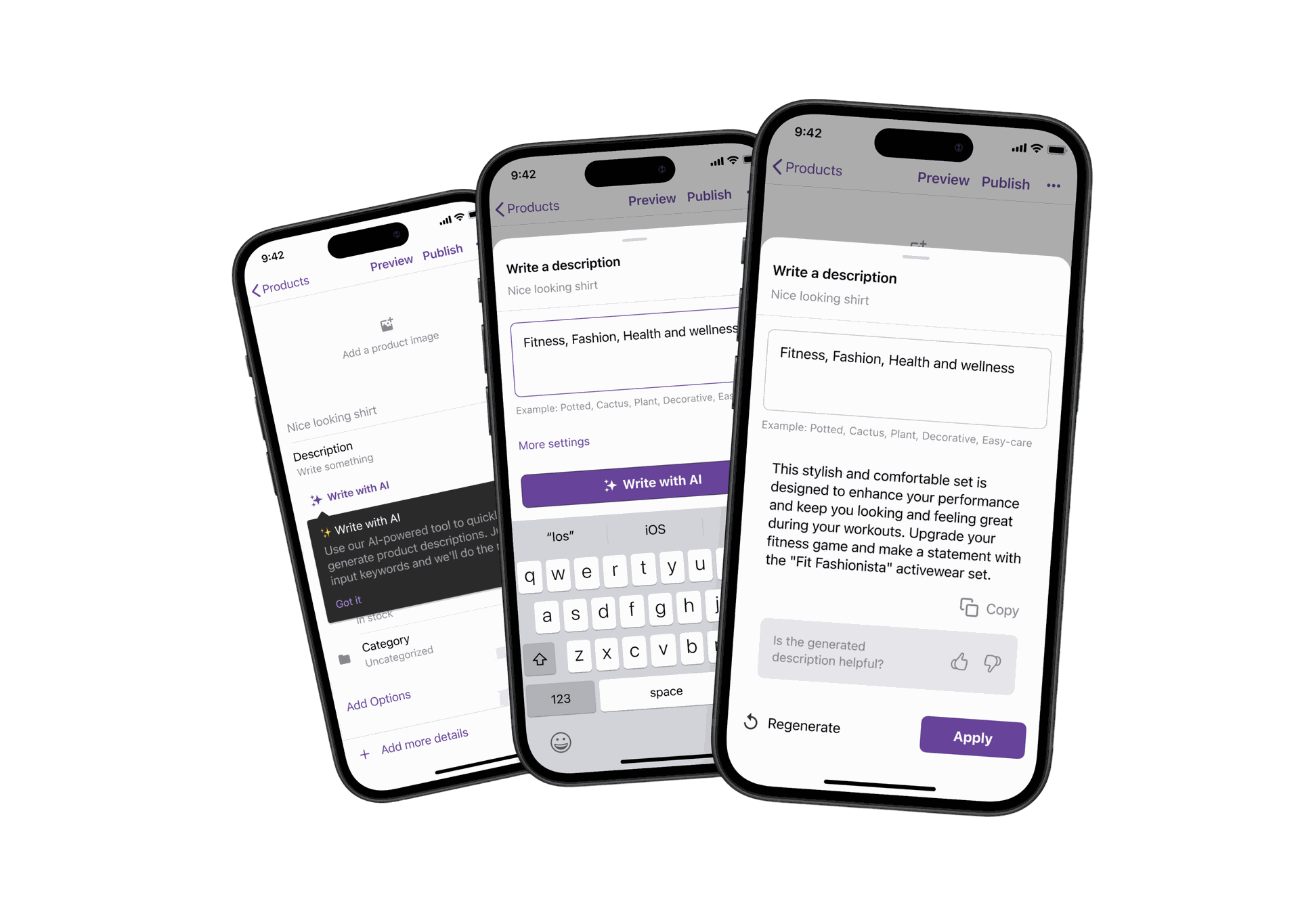
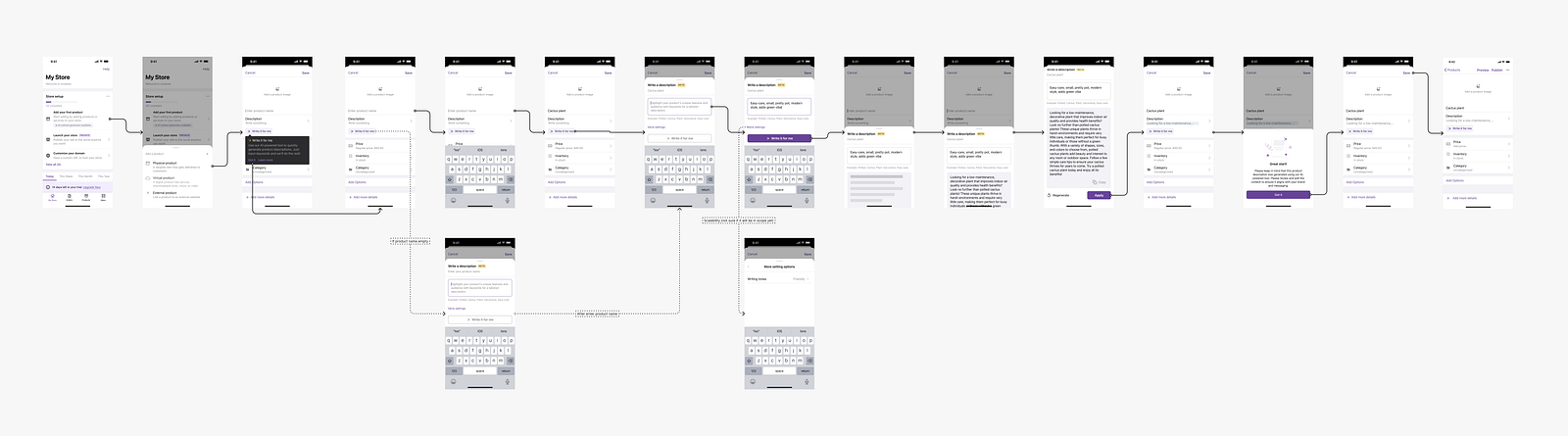
That's where we started. In our first phase, we introduced a simple button: Write it for me. We placed it directly in the product description field, right where the struggle usually began. With one tap, merchants could generate a description based on just a few key details about their product.
This wasn't just about adding AI for its sake. Unlike a flashy add-on, we wanted the feature to feel natural, helpful, and supportive, so we kept the design simple. We didn't have the luxury of weeks of full research, so we leaned on design best practices, team feedback, and a clear goal: make this as easy as possible for merchants.
Phase 2, comprehensive AI-powered product creation
After we shipped the first phase, we didn't stop there. In the second phase, we took the idea further. If AI could help with descriptions, what if it could help with the whole product listing?
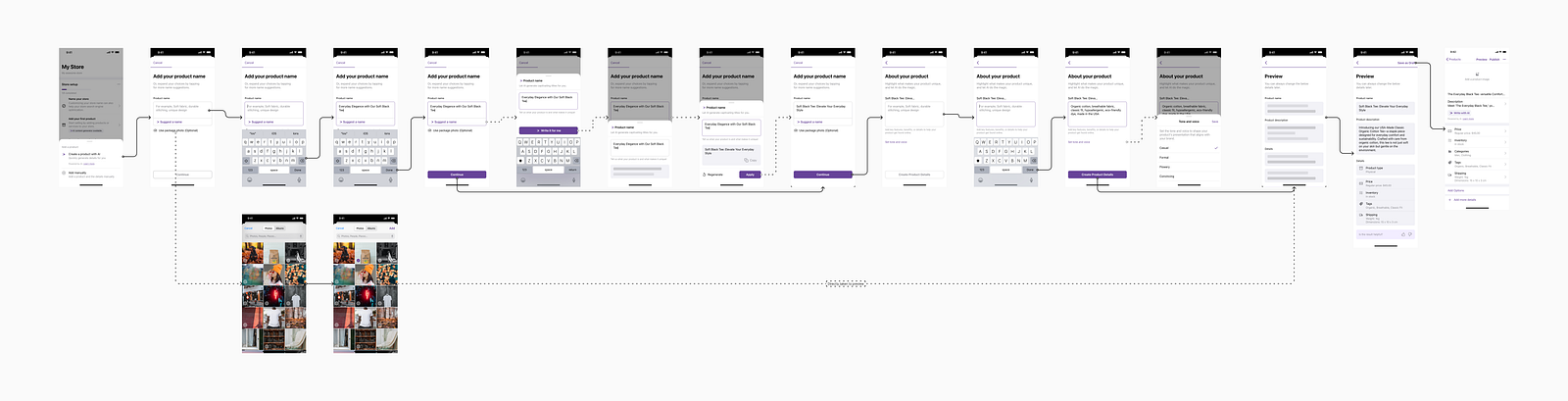
We introduced a simple choice at the start of the flow. Merchants could either use the AI-powered creation path or stick with the traditional template they already knew. This wasn't about forcing a new way of working, it was about offering a faster, simpler option for those who wanted it.
The AI flow was built around two core steps:
- Enter a product name, with AI suggestions available.
- Upload a photo, and let the AI handle the details.
Merchants could preview the AI-generated content, descriptions, categories, tags, and make changes. Control always stayed in their hands.
We worked closely with the iOS and Android engineering teams throughout this process, navigating technical constraints, adapting our ideas based on feasibility, and focusing on delivering value quickly. Our approach wasn't perfect, but it was practical. Seeing how real merchants used the features we built helped us learn what worked and what didn't.
Results
Our phased implementation of AI-powered features delivered clear, measurable impact:
+25%
Increase in product listing completion rate, helping more merchants successfully publish
2-step
AI flow, name plus photo, replaced a multi-field form
2 phases
Shipped iteratively to learn from real merchants between releases
Reflections
Looking back, this project reinforced a few important lessons.
First, trust is everything. AI can be a powerful tool only if users feel it's working with them, not for them. Merchants told us the AI features helped them overcome the mental block of writing product descriptions. They appreciated having a fast option that also gave them control, it generated content quickly, but let them make the listing their own.
Second, solving the right problem matters more than building the perfect solution. We could have spent months perfecting the UI or chasing edge cases. But by focusing on the core challenge, helping merchants get past that blank page, we shipped something valuable and learned from real-world usage.
Third, iteration beats perfection. Our first phase was not perfect. We had to test assumptions, navigate technical constraints, and make tradeoffs. For example, we originally imagined a "magic button" that could auto-generate an entire product listing from a single photo. That vision was not feasible given the technical limitations at the time. Instead, we focused on what was possible, requiring both a product name and a photo for the AI to work, and shipped a version that delivered real value without overpromising.
If I could do it again, I would push for even earlier feedback from merchants. Some of our design choices, like button labels or flow structure, could have been refined sooner with a few targeted interviews or usability tests.
Most of all, I'm proud that we stayed focused on what really mattered: helping merchants succeed. I want to keep making that impact in every project I work on.
Credits
This project was made possible through the collaborative efforts of the iOS and Android engineering teams, and product and team leads. Special thanks to all team members who contributed their expertise and dedication. ✌️